
I Once Thought More Protein = Instant Gains
Let me level with you—when I first got serious about training, I obsessed over hitting huge protein numbers. I believed if I just ate more, everything else would magically fall into place. Spoiler: it didn’t.
After chatting with several trainers and nutrition coaches (and messing up my gut a few times), I realized that high‑protein diets carry pitfalls many people don’t see. If you follow blindly, you might stall results—or even hurt yourself.
So, here are the hidden mistakes many trainers see (and some I’ve lived through). Let’s demystify this together.
1. Mistake: Thinking “High Protein” Means Unlimited Protein
I’ll say it: more protein is not always better. Yep, that’s a tough pill to swallow when protein is your diet’s star.
Why this trap happens:
- People assume once the “minimum” is covered, they can just pump up protein infinitely.
- They forget that protein still contains calories; excess = surplus = potential fat gain.
What trainers warn about:
- Overdoing protein can lead to digestive issues, dehydration, kidney stress (especially if you already have kidney concerns). (EatingWell)
- Some experts note that eating extremely high protein might crowd out other macro/nutrient needs (fiber, healthy fats, micronutrients). (Counter)
Smart fix: Find a target (for many active folks, ~1.6–2.2 g per kg of bodyweight is plenty) and stay in a “sweet zone” rather than going extreme.
2. Mistake: All the Protein in One Meal (or Clustered in Few Meals)
You ever eat a massive steak dinner and assume it’s “done for the day”? Trainers cringe at that.
Why it’s a mistake:
- Your body can only synthesize so much muscle protein from one meal. Piling on doesn’t boost gains linearly.
- You’ll likely get starving later, mess up later meals, or binge on junk.
What better coaches suggest:
- Spread protein across meals and snacks. Aim for 20–30 g (or more, depending on your body) per sitting. (Healthline)
- If you train later, include a post-workout dose to support recovery.
I used to cram 100 g at dinner and then drip tiny amounts all day. When I switched to evenly spaced protein, my satiety and performance improved.
3. Mistake: Leaning Too Heavily on Processed Proteins & Shakes
Protein powder is convenient. But if your diet is mostly powder, you’ve stepped into danger territory.
Why trainers warn:
- Many “high-protein” bars/shakes hide added sugars, artificial sweeteners, fillers. (Health)
- Overreliance on processed options can lead to nutrient gaps (phytonutrients, fiber, vitamins) that whole foods would cover.
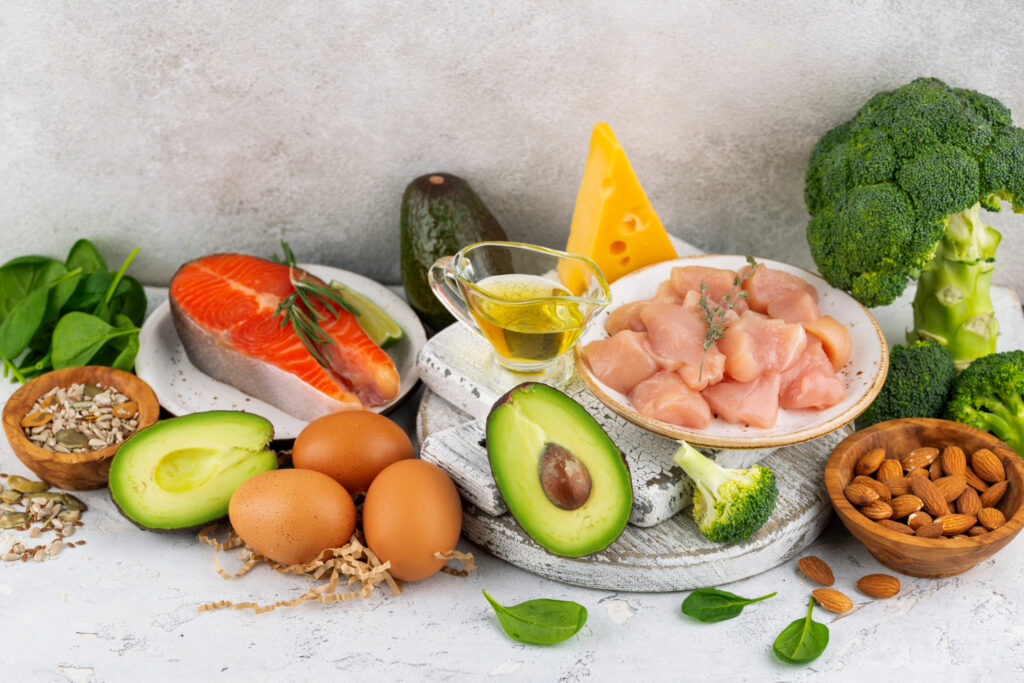
Better approach: Use shakes as a tool, not as a foundation. Prioritize whole‑food protein sources (chicken, fish, eggs, legumes, tofu, etc.).
4. Mistake: Ignoring Carbs & Healthy Fats (Balance Vanishes)
Some folks go high‑protein and act like carbs and fats are enemies. Trainers see that a lot—and it bites people back.
Why that’s a mistake:
- Carbs fuel high-intensity work. Strip them too low and you lose performance.
- Healthy fats support hormones, satiety, and joint health. Neglecting them can mess up your recovery and long-term adherence.
What smart coaches recommend:
- Keep a balanced plate: protein + fibrous carbs + healthy fats. (Counter)
- Use more complex carbs (whole grains, veggies) around workouts; not everything has to be zero-carb.
When I ignored fats for a while, I felt hungrier, weaker, and frankly grumpier. The balance made a world of difference.
5. Mistake: Not Drinking Enough (Underestimating Hydration Needs)
You’d think this is obvious. But trainers see dehydration all the time among high-protein dieters.
Why this matters:
- Processing extra protein produces nitrogen waste—you need more water to flush it out. (NDTV Food)
- Low hydration makes protein digestion harder and can worsen constipation.
Trainer tip: Carry a big water bottle. Sip continuously. If your urine is dark, you’re behind the curve.
6. Mistake: Forgetting Fiber & Micronutrients (You’re Not a Robot)
If your meals are steak + egg + whey every day, your gut—and your long-term health—will suffer.
Why this is risky:
- Low fiber = bloating, constipation, bad gut microbiome.
- Micronutrient deficiencies (magnesium, potassium, vitamins) sneak in when you ignore variety.
Pro moves:
- Add fibrous veggies, fruits, legumes (if you tolerate them) to your protein mix.
- Rotate protein sources (fish, lean meat, plant protein) to get different micronutrients. (Healthline)
I once went overboard on animal protein. I got bloated fast. Bringing back veggies fixed me.
7. Mistake: Not Accounting for Calories (Yes, Even With Protein)
Here’s a blunt truth: protein has calories too. You can overeat protein and still gain fat if your total calorie intake is over your maintenance.
Why people mess this up:
- They assume “protein = safe zone,” so they don’t track or measure portions.
- They think as long as macros are “good,” surplus doesn’t matter.
Wisdom from trainers:
- Measure or weigh food, especially early on, to know what a portion actually is. (Body Network)
- Use high-protein foods wisely—don’t default to massive portions.
I personally underestimated how many calories were in a giant chicken thigh. Even though it was “lean protein,” it added up fast.
8. Mistake: Thinking High-Protein Solves Everything (No Strategy)
Some people use protein increase as a fix-all. But trainers see that without purpose, it’s just noise.
Missing strategies include:
- No progressive training: If your muscles aren’t challenged, extra protein won’t build new muscle.
- No recovery plan: Sleep, stress management, rest days—they matter.
- No consistency: Shifting protein goals every week confuses the system.
Protein is a tool, not a magic wand. Use it with strategy: consistent training, rest, periodization.
9. Mistake: Ignoring Personal Health Contexts (Trainers Warn This All the Time)
This is where things get risky. Trainers often see people go full swing into high-protein diets without regard to individual health.
What they caution:
- If you have kidney issues, diabetes, or some metabolic conditions, too much protein might be harmful.
- Thyroid, gut health, or hormonal imbalances may shift your ideal intake up or down.
- No one-size-fits-all solution. What worked for your gym buddy might wreck you.
I once followed a “high-protein heavy weight loss” plan that ignored my mild kidney markers. I ended up feeling awful and had to back off. Always check with a health pro if you have any concerns.
10. Mistake: Thinking the Diet Is Static (No Adjustment)
One error trainers see: people treat high-protein dieting like a “set it and forget it” deal. It’s not.
Why that’s a mistake:
- Your body changes. Your goals, activity levels, metabolism shift.
- Sticking rigidly without recalibration leads to plateaus or burnout.
What good trainers do:
- Regularly (weekly/biweekly) assess progress and adjust macros.
- Use feedback: energy levels, mood, performance.
- Cycle in higher-carb or lower-protein phases when needed.
I used to have a “never deviate” mentality. When I started listening to my hunger, performance cues, and tweaking, my results improved.
Final Thoughts: Use Protein Smartly, Not Sloppily
Here’s the big takeaway: high-protein diets can work wonders—but only when used intelligently. Trainers don’t go on rants about protein for fun—they see what goes wrong daily.
So, to recap:
- Don’t overdo protein—stick to a smart target.
- Spread it out instead of jamming it into one meal.
- Use whole foods first; don’t rely on processed bars and shakes.
- Balance with carbs, fats, fiber, micronutrients.
- Hydrate enough to support digestion.
- Track portions and calories.
- Pair protein with good training, recovery, and flexibility.
- Adjust as you go.
- Honor your health context.
If you can avoid these hidden mistakes, your high-protein diet becomes a high-power diet. And if at any point you feel off—gut, energy, mood—don’t double down. Reassess, tweak, get support.
Want a sample macro breakdown or a week’s worth of protein-centered meals (without the damage)? I got you. Let’s build something smart—not just high.