
Ever feel like you don’t have time to workout—but still want something that actually torches fat? I’ve been there too. I’ve built this 20‑minute HIIT workout that’s short, brutal in a good way, and designed to get your metabolism revving long after you stop.
Stick with me, and by the end you’ll have a no‑fail routine you can do in your living room (or backyard), no fancy gym required.
Why a 20‑Minute HIIT Routine Works (and Doesn’t Suck)
The Fat‑Burn & Afterburn Effect
High-Intensity Interval Training (HIIT) combines bursts of near-max effort with short rest. That pattern pushes your body to burn fat during and after the workout (EPOC / afterburn). You don’t need an hour of cardio to see results.
Time Efficiency = Life Hack
If I tell you it takes 20 minutes, I know you’ll do it more often. I’ve tried 60‑minute routines—and often skipped them. But 20? That’s doable even on busy days.
Full‑Body Engagement = More Calorie Burn
This routine involves multiple muscle groups. You don’t isolate just legs or arms; you hit your whole body. That multiplies calorie burn and makes the workout worthwhile.
Structure & Guidelines Before You Begin
Before we jump into the moves, here are some ground rules to help you get the most:
- Warm up for 3–4 minutes (jog in place, leg swings, arm circles)
- Perform each exercise for 40 seconds, then rest 20 seconds
- Do 4 rounds total (that gives you 16 minutes of intervals + rest)
- Cool down for 2–3 minutes (stretch, deep breaths)
- Modify as needed (lower impact, slower pace)
- Use a timer or HIIT app—don’t count in your head
And yes—you can absolutely adapt it to your fitness level.
The 20‑Minute HIIT Workout
Here are the 8 exercises you’ll cycle through, with instructions and tips.
| # | Exercise | What to Do | Tips & Modifications |
|---|---|---|---|
| 1 | Bodyweight Squats | Stand feet shoulder-width, drop hips back, return | Go deep (if mobility allows). Add a jump if you want extra burn. |
| 2 | Push‑Up (or Knee Push‑Up) | Hands shoulder width, lower chest, push up | If full push-up is too hard, drop to knees or do incline push-ups. |
| 3 | Jumping Jacks / Modified Jacks | Jump feet out & raise arms overhead, then back | For lower impact, step side to side instead of jumping. |
| 4 | Mountain Climbers | In plank, drive knees alternately toward chest quickly | Keep core tight; slow it down if form breaks. |
| 5 | Alternating Reverse Lunges | Step back into lunge, alternate legs | Use static lunges if balance is tricky. |
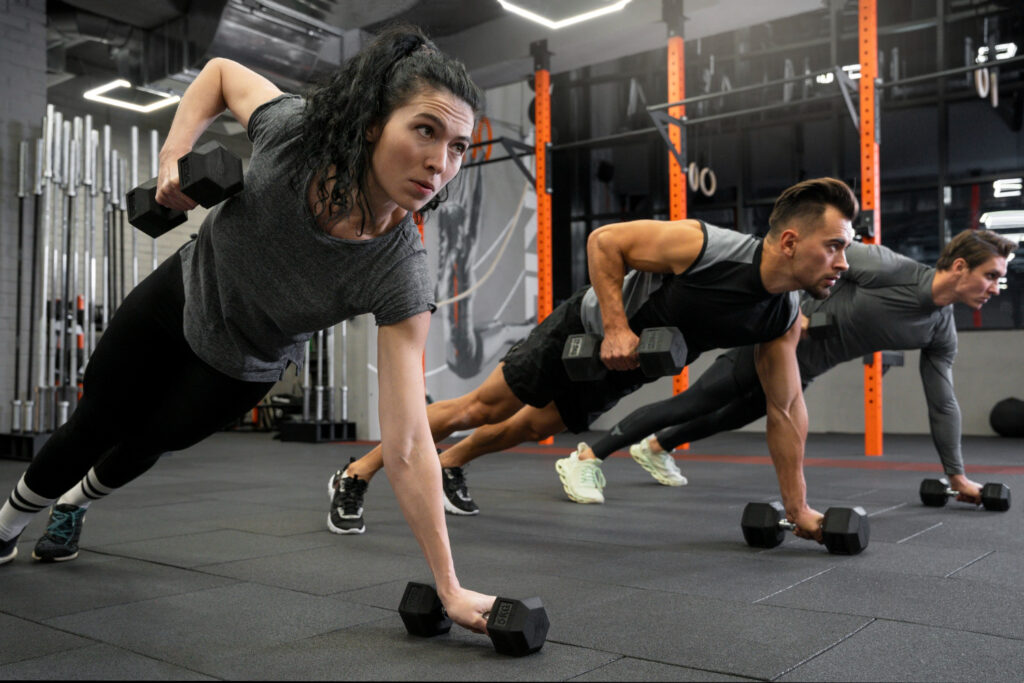
| 6 | Plank to Push‑Up (Up‑Down Plank) | Start plank, one arm pushes up to elbow plank, switch | Do forearm plank hold instead if that’s better for your shoulders. |
| 7 | High Knees (or Marching High Knees) | Run in place bringing knees high | For lower impact, march with knee lifts. |
| 8 | Bicycle Crunches | Crisscross elbows to opposite knees while cycling legs | Keep torso lift modest—don’t strain your neck. |
You’ll cycle through these in order, rest 20 seconds between each. After the 8th exercise, rest 1 minute, then repeat for 4 total rounds.
That structure gives you about:
- 8 × 40s = 320 sec = ~5.3 min per round
- 7 rest periods (20s each) per round = ~2.3 min rest
- 1 minute rest between rounds × 3 = 3 min
- Warm-up + cool-down complement
Total time lands around 20 minutes (give or take a bit).
Tips to Get More Fat Loss from This HIIT Session
1. Push the Intensity (Within Reason)
Don’t half‑ass it. During the 40 seconds, push yourself—get your heart rate up. But if form breaks down, slow down. Good form > sloppy speed.
2. Use Variation Over Time
After 2–3 weeks, switch up movements. Swap squats for jump squats, mountain climbers for plank jacks, lunges for skaters. You’ll keep your body guessing.
3. Time of Day & Meal Timing
If possible, do this workout before or somewhat near your first meal. That nudges your body to tap into fat stores. But don’t starve yourself. A small protein + carb snack beforehand works if you need energy.
4. Add Resistance If You Want More
If you have dumbbells, wrist weights, resistance bands, use them. Hold dumbbells during lunges, wear a light vest for push-ups. Just don’t overcomplicate—this is a bodyweight core.
5. Track Progress & Gradually Increase Volume
Start with 4 rounds. If that becomes easy, shift to:
- 45s work / 15s rest
- 5 rounds
- Or shorter rest times
But always keep form and recovery priority.
Example Week Using This 20‑Minute HIIT
Here’s how I’d build a week with this routine:
| Day | Workout |
|---|---|
| Monday | 20‑minute HIIT + light stretching or mobility |
| Tuesday | Low-intensity cardio (walking, cycling) or rest |
| Wednesday | HIIT again (or variation) |
| Thursday | Strength / weights or yoga |
| Friday | HIIT or mix (circuit) |
| Saturday | Active fun (hike, swim) |
| Sunday | Rest or gentle mobility |
That pattern ensures you don’t burn out.
My Experience & What I Learned (So You Don’t Repeat My Mistakes)
- When I first tried 20-minute HIIT, I underestimated rest. I pushed too hard too soon—and flared up a knee injury. So ease in.
- I found consistency matters more than ultimate intensity. Doing 4 rounds clean is better than 8 rounds sloppy once.
- After workouts, I fueled smart (protein + veggies) or I’d feel shaky and binge later.
- I tracked heart rate and started seeing my average HR rise as fitness improved—that’s progress.
One friend said she always skipped workouts because she “didn’t have an hour.” When she switched to 20-minute HIIT, she never skipped. That says a lot about how right‑sized workouts win.
Safety, Warm-Up & Cool-Down Notes
Warm Up (3–4 Minutes)
- Light jog in place or march
- Arm circles, leg swings
- Dynamic stretches (hip circles, lunges with twist)
Cool Down & Stretch (2–3 Minutes)
- Gentle walking or marching
- Stretch quads, hamstrings, calves, chest, shoulders
- Deep breathing to bring heart rate down
Safety Tips
- If you have joint issues, pick low-impact versions
- Stop or regress if you feel sharp pain
- Keep torso/ core engaged—don’t let the back sag
- Hydrate well before & after
How This Workout Burns “Maximum Fat” (Without Being Magical)
- High intensity drives your heart rate and demands energy
- Afterburn effect (EPOC) means you burn extra calories post-exercise
- Whole body moves recruit many muscles, boosting calorie demand
- Short duration + high quality ensures you’re less fatigued and more consistent
Yes, it’s a “maximum fat burn in minimal time” tool—but only when you do it regularly, push intensity, and back it with good nutrition.
Troubleshooting & Frequently Asked Questions
Q: I can’t do full push-ups or jumping jacks—are modifications okay?
Absolutely. Use knee push-ups, step jacks, incline versions—whatever keeps you moving safely.
Q: What if 20 minutes feels too hard at first?
Start with 2 rounds and build. Or do 30s work / 30s rest to begin, then shift to 40/20.
Q: Will this put me into muscle loss mode if I fast too long afterward?
If your diet supplies enough protein throughout the day, doing HIIT before your first meal can be okay. But if you’re already under-eating, do a small protein snack before.
Q: Do I need equipment?
Nope. This is bodyweight-based. But adding dumbbells or bands later can help with progression.
Q: How many times per week is ideal?
2–4 times max. Your body needs recovery. Too much HIIT can backfire.
Final Thoughts: Get After It, But Be Smart
This 20-minute HIIT workout that burns maximum fat is a no-excuses, high-impact tool. It fits into busy days, scales with you, and drives real metabolic results (if you show up).
Just do it consistently, push when you can, rest when you must—and back it with good food and sleep. Your body will reward you.
So… you ready to set a timer and give it your best shot today? Let’s crush it. 💪